
Published by the Clinical Team at Anchored Healing Center | Mission Viejo, CA
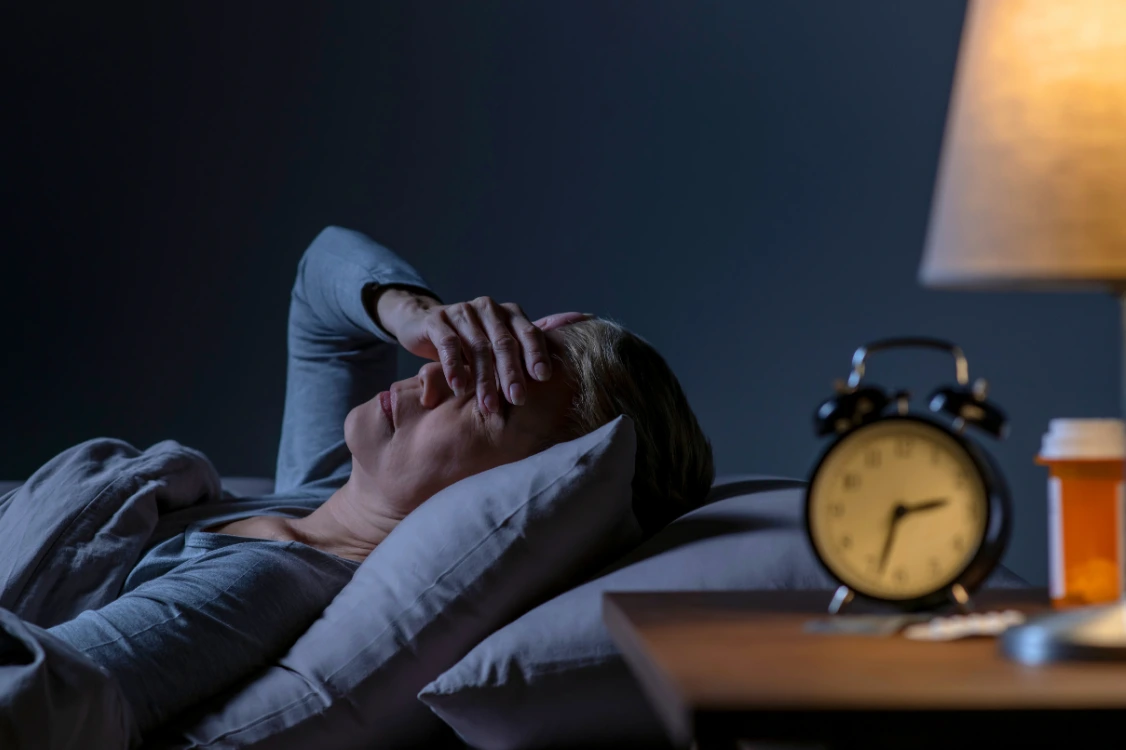
If you’ve ever spent a night lying awake with racing thoughts, or dragged yourself through a day after too little sleep feeling emotionally hollow and irritable, you already know intuitively that sleep and mood are connected.
But the relationship between sleep and depression runs far deeper than most people realize — and understanding it matters, because for millions of people struggling with depression, disrupted sleep is not just a symptom. It is an active driver of the condition itself.
At Anchored Healing Center, we work with clients every day who are caught in the sleep-depression cycle — exhausted, stuck, and unsure which problem to address first. This article explains what the science tells us about that cycle, why it matters for recovery, and what can be done about it.
The Two-Way Relationship Between Sleep and Depression
Sleep and depression do not have a simple cause-and-effect relationship — they have a bidirectional one. Depression disrupts sleep. Disrupted sleep worsens depression. And the cycle can become self-sustaining in ways that make both conditions harder to treat.
This is not a new observation. Clinicians have known for decades that sleep disturbance is one of the most consistent features of depressive illness — appearing in an estimated 75–90% of people with major depressive disorder. What has become clearer in recent years is that the relationship is not simply one of symptom and cause. Sleep disruption actively maintains and amplifies depression through specific neurobiological mechanisms — making it a treatment target in its own right, not just a side effect to wait out.
How Depression Disrupts Sleep
Depression affects sleep in multiple ways, and the presentation varies between individuals.
Insomnia
The most common sleep disturbance in depression is insomnia — difficulty falling asleep, staying asleep, or waking significantly earlier than intended and being unable to return to sleep. Early morning awakening in particular is considered a hallmark feature of melancholic depression: waking at 3 or 4am with an immediate flood of dark, ruminative thoughts and an inability to fall back asleep.
The neurobiological mechanisms behind depression-related insomnia include dysregulation of the HPA (hypothalamic-pituitary-adrenal) axis — the body’s central stress response system — which produces elevated cortisol levels that disrupt the normal sleep-wake cycle. Depressed individuals often show higher cortisol levels at night, when cortisol should be at its lowest, interfering with sleep onset and maintenance.
Hypersomnia
Not all depression looks like insomnia. A significant subset of people with depression — particularly those with atypical depression or bipolar depression — experience hypersomnia: sleeping excessively, feeling unrefreshed despite many hours in bed, and struggling with profound daytime sleepiness. This presentation is particularly common in younger adults and in depression associated with seasonal patterns.
Hypersomnia in depression is not simply “sleeping a lot.” It represents a dysregulation of the arousal system — the brain’s capacity to generate and sustain wakefulness — and the excessive sleep does not restore energy or mood the way healthy sleep does.
Disrupted Sleep Architecture
Even when depressed individuals achieve adequate sleep duration, the quality of that sleep is frequently compromised. Research using polysomnography — the detailed measurement of brain activity during sleep — has consistently found that depression alters sleep architecture in specific ways.
People with depression typically show reduced slow-wave sleep (the deepest, most physically restorative stage), shortened REM latency (entering REM sleep earlier in the night than normal), and increased REM density (more intense, more emotionally charged dreaming). REM sleep is associated with emotional memory processing, and the disrupted REM patterns in depression are thought to contribute to the emotional dysregulation, negative mood, and memory difficulties characteristic of the condition.
How Disrupted Sleep Worsens Depression
The more significant and clinically important insight is not just that depression disrupts sleep — it is that disrupted sleep actively makes depression worse.
Emotional Dysregulation
Sleep deprivation — even partial, chronic sleep deprivation of the kind produced by insomnia — significantly impairs the prefrontal cortex’s ability to regulate the amygdala. The amygdala becomes hyperreactive; the rational, regulating brain goes offline. The result is amplified negative emotion, increased reactivity to stressors, reduced capacity for positive emotion, and a negativity bias in the interpretation of neutral events.
These are also core features of depression itself — which is why sleep deprivation creates a neurological state that is functionally very similar to depression, and why it deepens depressive states in people who already have them.
Rumination
One of the most damaging features of depression is rumination — the repetitive, passive cycling through painful thoughts and feelings. Sleep disruption, particularly the early morning wakening pattern, creates a specific vulnerability to rumination: lying awake at 3am with no external stimulation, the depressed mind turns inward and amplifies. The thoughts that feel most catastrophic at 3am are not accidents — they are the product of a prefrontal cortex suppressed by sleep deprivation and an amygdala running unchecked.
Neuroplasticity and Recovery
Sleep is when the brain consolidates learning, clears metabolic waste products through the glymphatic system, and performs the cellular maintenance that supports neuroplasticity — the brain’s capacity to change and heal. This matters enormously for depression treatment, because therapy works through neuroplasticity: building new thought patterns, processing emotional material, developing new behavioral responses.
When sleep is chronically disrupted, the brain’s capacity for this kind of adaptive change is compromised. This is one reason why poor sleep during a course of therapy is associated with slower and less durable treatment outcomes. Addressing sleep is not separate from addressing depression — it is part of it.
The Predictive Power of Sleep Disturbance
Perhaps the most striking evidence for the centrality of sleep in depression is its predictive role. Research has consistently found that insomnia is not just a symptom of depression — it is a significant risk factor for developing depression in people who don’t currently have it, and one of the strongest predictors of depressive relapse in people who have recovered.
A meta-analysis published in Sleep journal found that individuals with insomnia had a twofold increased risk of developing depression compared to those without sleep problems. This finding has been replicated across multiple large longitudinal studies and has fundamentally shifted how clinicians think about the sleep-depression relationship.
Sleep Disturbances as a Warning Sign
Because of the bidirectional relationship between sleep and depression, persistent sleep disturbance deserves clinical attention even in the absence of a current depressive episode.
If you are experiencing any of the following consistently for two weeks or more, it is worth discussing with a mental health professional:
- Difficulty falling asleep most nights despite feeling tired
- Waking in the early hours with an inability to return to sleep
- Sleeping significantly more than usual without feeling restored
- Unrefreshing sleep that leaves you exhausted regardless of duration
- Nightmares or vivid, distressing dreams
- Significant daytime fatigue affecting functioning
These patterns may be early warning signs of a developing depressive episode, or they may be maintaining a depression that has already taken hold. Either way, they are worth taking seriously — and they are treatable.
Treating the Sleep-Depression Cycle
The bidirectional nature of the sleep-depression relationship has important treatment implications. Addressing only one side of the cycle — treating depression while ignoring sleep, or improving sleep hygiene while leaving depression untreated — produces less complete and less durable results than addressing both simultaneously.
Cognitive Behavioral Therapy for Depression (CBT-D)
CBT for depression addresses the thought patterns and behavioral responses — including the behavioral withdrawal and rumination — that maintain depressive states. As depression lifts through therapeutic work, sleep often improves in parallel. However, sleep difficulties frequently persist even after mood improves, which is why targeted sleep interventions are often necessary alongside depression treatment.
Cognitive Behavioral Therapy for Insomnia (CBT-I)
CBT-I is the evidence-based first-line treatment for chronic insomnia — and its effects on depression are significant. Multiple studies have found that successfully treating insomnia with CBT-I produces meaningful reductions in depressive symptoms, even when depression was not the primary treatment target. A landmark 2016 study published in JAMA Internal Medicine found that CBT-I not only improved sleep but reduced depression, anxiety, and suicidal ideation in participants.
CBT-I typically includes sleep restriction therapy, stimulus control, sleep hygiene education, and cognitive restructuring of the beliefs and fears that perpetuate insomnia. It is effective, non-medication based, and produces durable results.
Behavioral Activation
One of the core components of CBT for depression — behavioral activation — has direct sleep benefits. Increasing engagement in meaningful activity, particularly physical movement and outdoor exposure to natural light, helps regulate the circadian rhythm and build homeostatic sleep pressure, improving sleep quality in ways that are synergistic with mood improvement.
Addressing Rumination
Because nighttime rumination is one of the primary mechanisms through which insomnia and depression reinforce each other, therapeutic work specifically targeting rumination — through mindfulness, CBT techniques, and scheduled worry time — directly improves both sleep onset and depressive symptom severity.
When to Seek Help
If sleep problems and depression are affecting your daily life — your relationships, your work, your ability to experience any sense of wellbeing — professional support can make a meaningful difference.
Our depression treatment program at Anchored Healing Center addresses the full picture of depressive illness, including the sleep disruption that so frequently accompanies and sustains it. We use evidence-based approaches including CBT, DBT, and mindfulness-informed therapy, tailored to each individual’s presentation.
You don’t have to keep lying awake wondering when things will feel better. They can — with the right support.
Contact us today to schedule a confidential consultation. Serving Mission Viejo, Laguna Hills, Lake Forest, Laguna Niguel, and greater Orange County.
This article is for educational purposes only and does not constitute medical advice. If you are in crisis, please call or text 988 or contact your nearest emergency services.